

Chemical Engineering
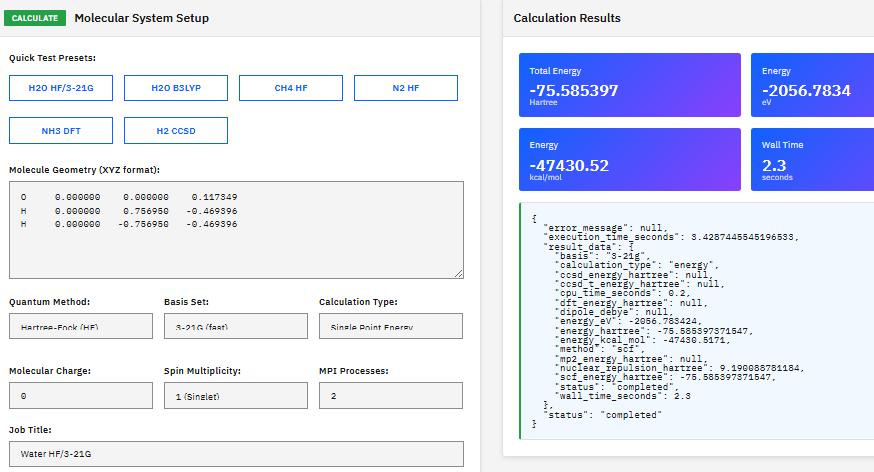
Paramus brings computational modeling, CFD, and chemistry together to accelerate process development and scale-up.
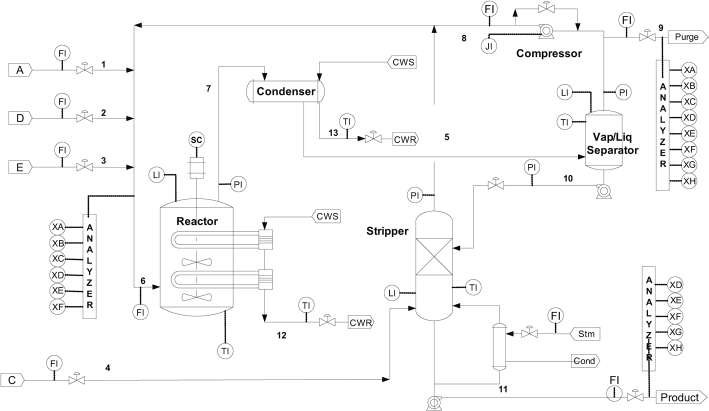
Enter copilot, openAI and Claude for chemical engineers: real unit operation handling, validated material streams, and predictive models.
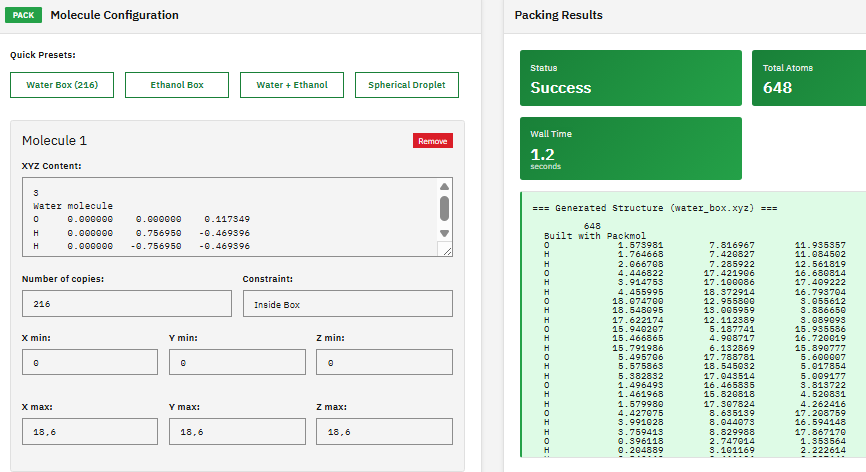
The best of both worlds: large-language-model capability fused with chemical exactness for real unit design and plant calculations.
Paramus CENG
The Paramus Chemistry Solution accelerates chemical engineering through AI-powered models and predictive analytics.
from $899 USD*
named user, per year, terms apply. Some apps require commercial licenses from the vendors.
Order here:
Included
The chemical engineering package from Paramus contains:
Models
Process Simulation & Optimization
Modelica simulation for multi-domain systems (mechanical, thermal, fluid)
CAPE-OPEN process simulator: flash, VLE/LLE, unit operations
Chemical equilibrium & kinetics via Gibbs energy minimization
Bayesian optimization for experimental design & process tuning
Automatic reaction mechanism generation for combustion & pyrolysis
Data
Datasets (Chemical Engineering)
Open-access crystal structures for organic/inorganic compounds
134k organic molecules: HOMO, LUMO, gaps, dipole, Cv
QM9 + IR, Raman, UV-Vis spectra and tensorial properties
76 molecules with CCSD(T)/CBS atomization energies
Simulation & HPC
CFD, Molecular Dynamics & Quantum Chemistry
CFD toolbox: incompressible/compressible flow, turbulence, multiphase
Industrial CFD by EDF: Navier-Stokes, heat transfer, multiphase
Polydisperse multiphase flows via quadrature-based moment methods
Large-scale molecular dynamics for materials & fluids
MD engine for periodic systems with GPU acceleration
Semi-empirical QC (GFN2-xTB) for fast thermochemical screening
Python interface to DFT/MD codes and workflow orchestration
FAQ
Thermodynamic property estimation, reaction kinetics modeling, process simulation, phase equilibria, and transport property calculations for gases, liquids, and mixtures.
Yes. Combine quantum chemistry (DFT transition state search) with molecular dynamics to study reaction pathways, activation energies, and selectivity at the molecular level.
Import lab measurements into WORLD as semantic data, link them to computed properties, and use AI to identify correlations between process parameters and outcomes.
Yes. The AI copilot can suggest parameter variations, run sensitivity analyses across simulation engines, and summarize results to accelerate process development.
CSV, JSON, and RDF for tabular and semantic data. All datasets are stored in versioned knowledge graphs with full provenance tracking and SPARQL query access.