
TransPolymer
AI Models MIT (Free)
About
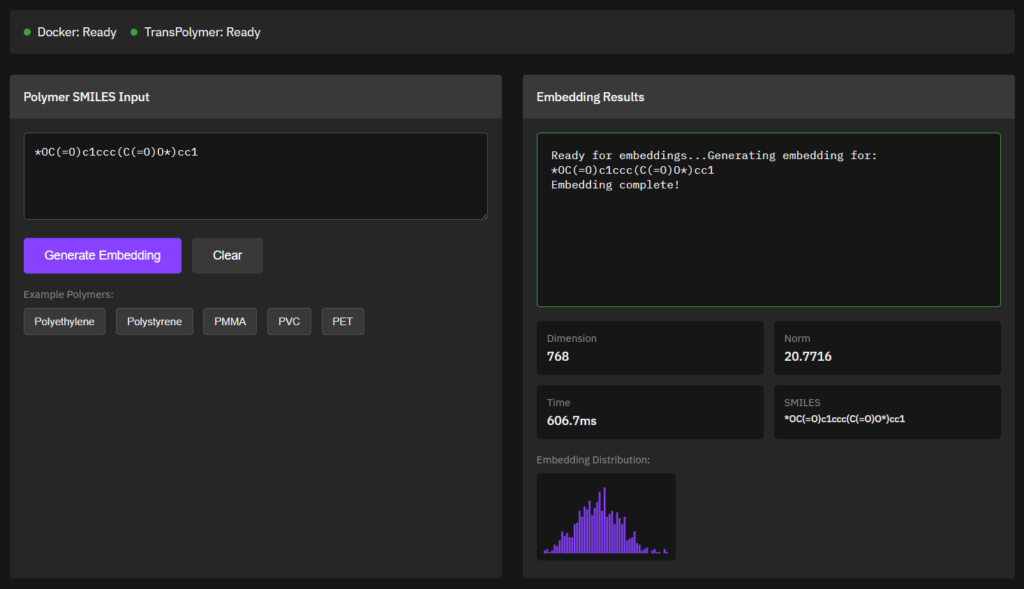
Predicts polymer properties using transformer-based deep learning models trained on polymer structure-property datasets. Designed for inverse design and polymer informatics workflows.
Citation
Xu, C.; Wang, Y.; Barati Farimani, A. TransPolymer: a Transformer-based language model for polymer property predictions. npj Computational Materials 9, 64 (2023). DOI:10.1038/s41524-023-01009-9
Frequently Asked Questions
What is TransPolymer?
TransPolymer is a ai models application available in the Paramus App Store. Predicts polymer properties using transformer-based deep learning models trained on polymer structure-property datasets. Designed for inverse design and polymer informatics workflows.
Is TransPolymer free to use?
Yes. TransPolymer is distributed under the MIT (Free) license and is available at no cost through the Paramus App Store.
How do I install TransPolymer?
TransPolymer is installed through Paramus Chemistry OS, an on-premise Windows platform for computational chemistry. Open the Paramus App Store in your local installation and select TransPolymer for one-click deployment.
What type of application is TransPolymer?
TransPolymer belongs to the “AI Models” category in the Paramus App Store. It runs on Paramus Chemistry OS and can also be accessed through Paramus Cloud for supported workflows.
What platform does TransPolymer run on?
TransPolymer runs on Paramus Chemistry OS, a Windows-based on-premise platform that provides local compute power for demanding simulations. It requires a Paramus OS installation with appropriate hardware resources.
Can TransPolymer be automated or integrated with AI workflows?
Yes. TransPolymer is available as part of the Paramus ecosystem which supports MCP (Model Context Protocol) tools for AI-driven automation. This enables integration with large language models and automated research pipelines.
How should I cite TransPolymer in publications?
The recommended citation for TransPolymer is: Xu, C.; Wang, Y.; Barati Farimani, A. TransPolymer: a Transformer-based language model for polymer property predictions. npj Computational Materials 9, 64 (2023). DOI:10.1038/s41524-023-01009-9